Candlestick, Wall-Mount and Desk Telephones: Comparing Vintage Forms
Compare three vintage telephone silhouettes by placement, footprint, installation planning and the questions to verify before purchase.
Compare vintage-style telephone forms by silhouette, placement, scale and display needs for homes, hospitality and retail.
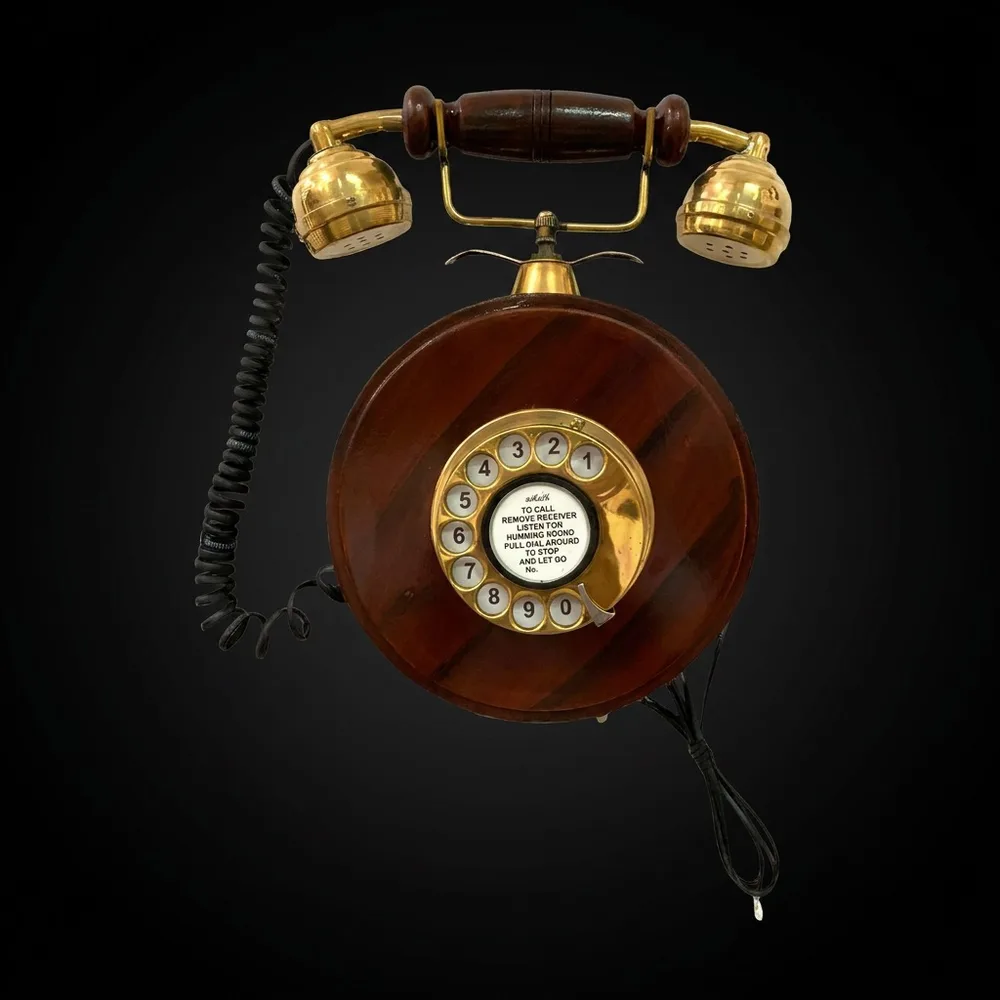
Vintage-style telephones are often chosen for the way their shapes change a room. A wall-mounted wooden set can fill vertical space, a candlestick form can become a desk focal point, and a rotary tabletop model can sit beside books or stationery. Before choosing a style, decide whether the telephone is intended as decor or as a working communications device. Treat the catalogue examples as display pieces unless exact-model documentation confirms operation; appearance and product titles do not establish current network or line compatibility.
The range includes an 11-inch wooden wall-mount rotary telephone with brass accents (ringx-11-0-1), a 14-inch brass candlestick rotary phone (ringx-14-0-2), and an 8-inch nautical French Victorian tabletop rotary phone (ringx-50-12). These products illustrate three placement approaches. Compare the exact model’s height, materials and layout with the intended room, then check any operational requirements separately with model-specific technical documentation.
The candlestick telephone is defined by an upright transmitter body and a separate receiver, with a base or stand that gives it a tall, narrow outline. Wall telephones shift the visual emphasis to a mounted body and handset arrangement. Tabletop rotary phones keep their components close to the desk surface, often using a compact base and dial. The Smithsonian’s telephone collection includes examples of candlestick, desk and wall forms, showing how varied these design families are across periods.
Use the names as design descriptions, not as guarantees about date or function. “Victorian style” or “vintage-inspired” can describe an aesthetic where supported. A contemporary replica should not be presented as an authentic antique unless provenance confirms it. Likewise, a rotary dial on a decorative telephone does not mean the unit can place calls. Explain the visible form and state when a model is for display.
| Form | Best display context | Planning check |
|---|---|---|
| Wall-mount | Hallway, study or hospitality corridor | Mounting surface, attachment method and wall clearance |
| Candlestick | Desk, console or display plinth | Total height, base footprint and nearby headroom |
| Rotary tabletop | Desk, side table or retail shelf | Desk depth, handset placement and dial visibility |
The 11-inch model is listed as wall-mount and has a wood-and-brass construction. Its first product photo does not show how it attaches, so ask for the mounting method, dimensions and included hardware before planning an installation. Do not drill based on a lifestyle image. The 14-inch candlestick version has a vertical profile and needs enough clearance above the base. The nautical tabletop example is listed at 8 inches high and can be considered where a smaller footprint is useful, though its actual base dimensions should be confirmed.
Measure the whole arrangement, including handset, cord if present, and room needed to approach the object. A display telephone on a narrow hallway console may protrude into a walkway. A wall-mounted model can conflict with door trim or artwork. Mark the approximate outline with paper or tape before installation to assess sightlines and reach. For hospitality settings, consider whether guests may touch or lift the handset and position the object accordingly.
Wooden bodies can harmonise with furniture and warm interiors. Brass can add contrast and highlight a dial surround, hooks or ornamental details. Antiqula’s wall-mount model combines wood and brass; its candlestick example is brass; the nautical rotary phone is also brass and emphasizes a maritime theme. Match the exact specification rather than assuming all trim is solid brass or all wood shares the same species and finish.
Details influence the style story: a curved receiver arm, a visible dial, an engraved panel or a compact base can suggest different periods and settings. Grouping a wall phone with nautical maps may make sense for a maritime shop, while a candlestick form pairs naturally with a desk vignette. Keep the display grounded and avoid presenting generic accessories as part of the telephone package. Check finish colour under the store’s own lighting before building a coordinated set.
Some vintage-style products include decorative dials, handset cords, lamp elements or other features. A photograph cannot confirm wiring, a dial’s operation, a power requirement or compatibility with a current telephone service. Before presenting any unit as functional, obtain written, model-specific specifications and verify them with the relevant provider or a qualified installer. In the absence of such evidence, label it as a decorative telephone replica.
This distinction matters especially for wall-mounted models. A customer might assume the product can replace an existing phone or connect to a modern system. Do not imply that it supports a particular connection type, network or country’s standards. If a product includes a working lamp or another electrical feature, request the applicable power, safety and installation documentation for that specific reference before making an operational claim.
A small telephone assortment can cover three silhouettes: wall, upright desk and compact tabletop. This creates a visible choice across different spaces. A hospitality buyer may focus on wall footprint and mount method; a gift buyer may prefer a desk model that can sit on a shelf; a themed retailer may value the nautical styling. Those customer contexts are useful prompts, not evidence of guaranteed demand.
Create a comparison label with exact reference, height, listed material, style and intended display position. Add a clear replica or decorative designation. For wholesale planning, confirm unit count, packaging, shipping dimensions and current order terms for the selected models. Where a catalogue field conflicts with another description, verify it rather than selecting the more attractive claim. Consistent records make it easier to reorder the same appearance later.
Dust gently and follow the supplier’s directions for wood, brass and any coated surfaces. The Canadian Conservation Institute notes that repeated brass polishing removes surface metal and can reduce detail; decorative patina or coating may be intentional. Avoid using metal polish on wood, cords, printed dial faces or unknown finishes. Keep the telephone away from moisture and place it where the handset or receiver cannot fall onto a hard floor.
At receiving, inspect the body, dial, handset, cords and mounting points. Check the product against its listing and note any damage before installation. A thoughtful display gives the object room, a visible silhouette and an honest description. The telephone can contribute a strong period-inspired accent even when its purpose is decorative; clarity about function protects the buyer’s expectations and makes the style easier to appreciate.
Catalogue reference: PostX 11.0.0. Listed material: Wood & Brass.
Check the current product page and ask for model-specific dimensions, packaging and suitability before ordering.
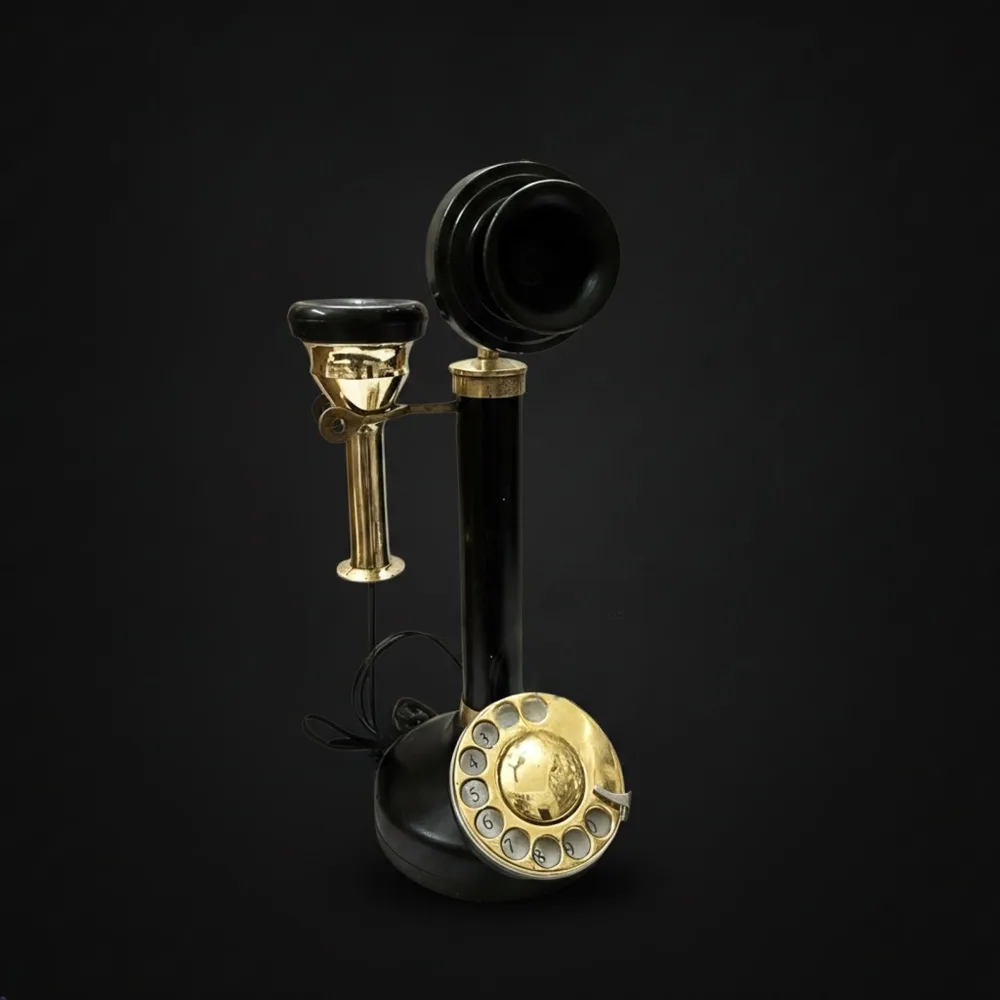
Catalogue reference: BellX 14.0.1. Listed material: Brass.
Check the current product page and ask for model-specific dimensions, packaging and suitability before ordering.
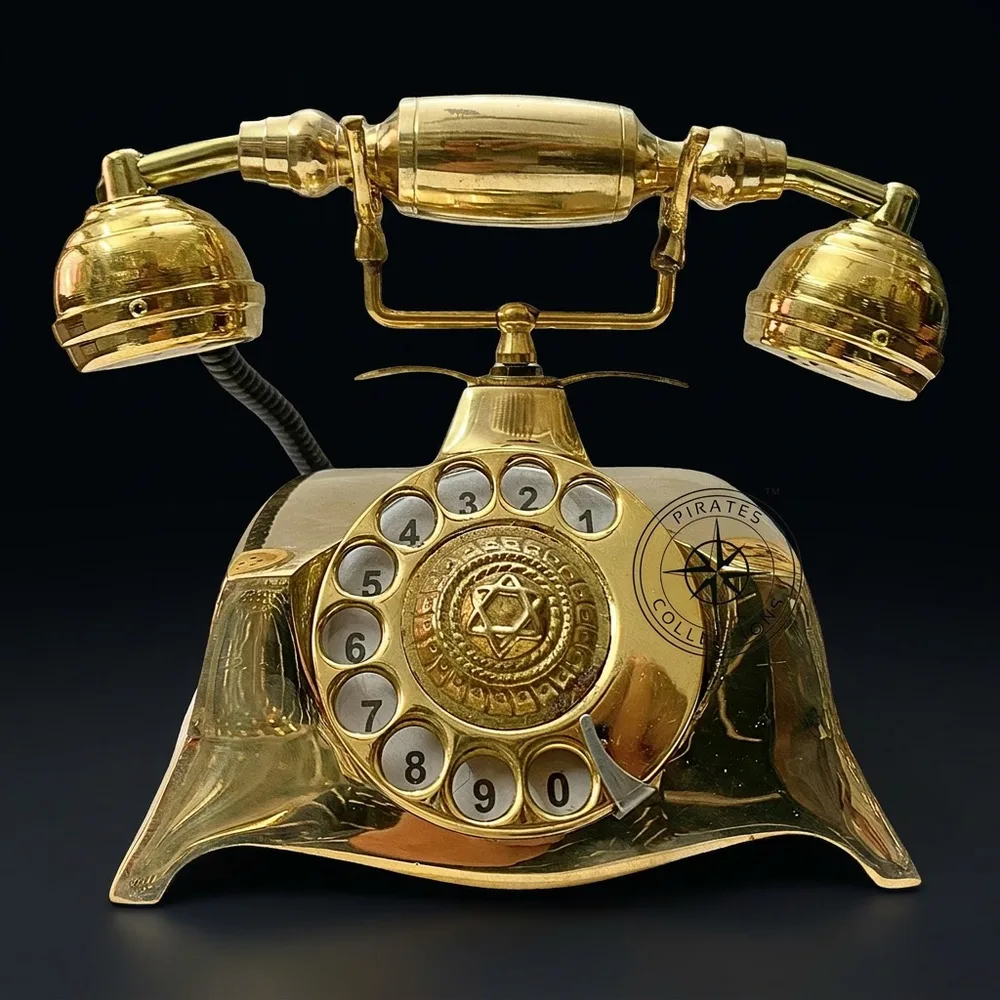
Catalogue reference: RingX 8.0.0. Listed material: Brass.
Check the current product page and ask for model-specific dimensions, packaging and suitability before ordering.
Explore Antiqula’s telephones catalogue
Catalogue examples were checked against Antiqula’s product records on 2026-10-02. Research sources provide context; they do not certify the performance of individual catalogue products.