Antique Cameras: Selection, Uses and Display Guide
Choose a vintage-style camera replica by silhouette, tripod height, materials and the space available for display.
Place a vintage camera replica with attention to tripod footprint, sightlines, surrounding materials and safe display in a studio or study.
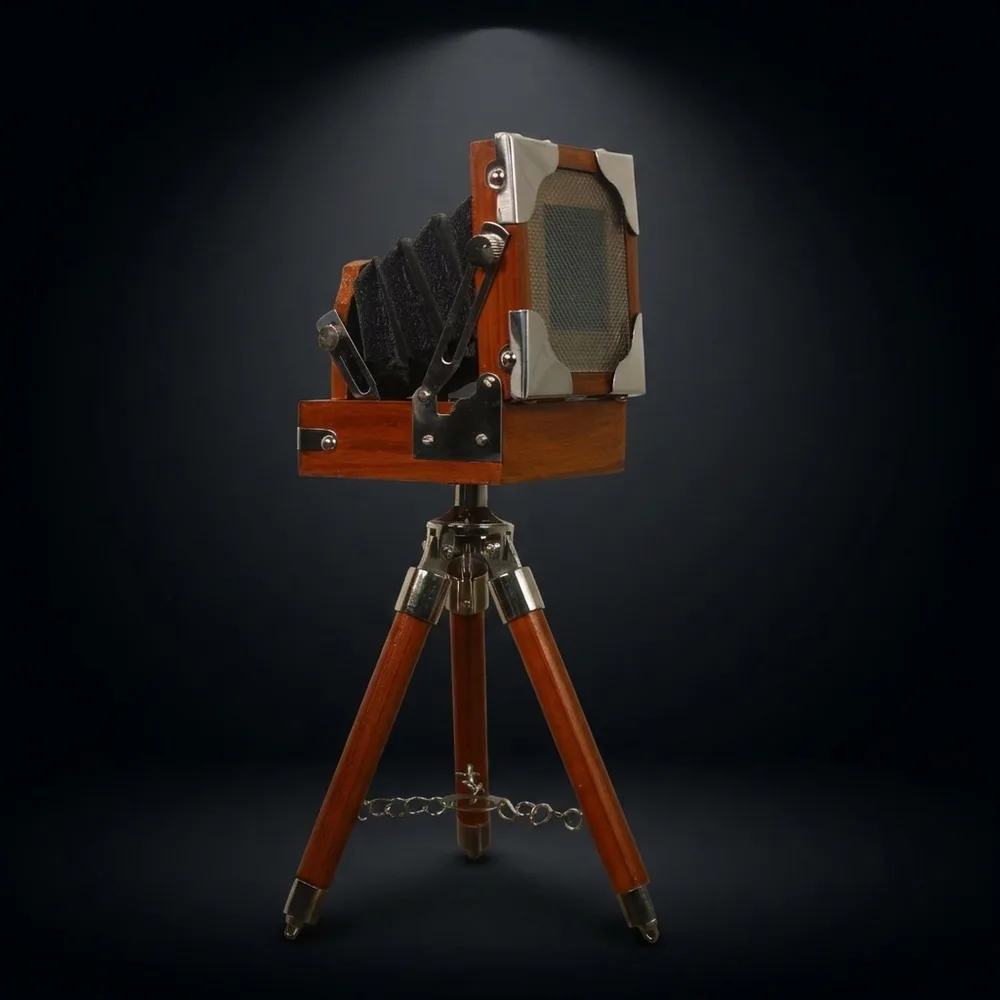
A camera replica can give a studio or study a strong visual reference point, but it needs room to read as an object rather than a pile of props. Choose the placement before assembling a themed vignette. Measure the tripod footprint, check sightlines from the doorway and desk, and keep the camera where visitors can see it without brushing against its legs.
Antiqula’s tabletop examples offer useful scale choices. ShutterX 10.0 is listed at 10 inches overall with an adjustable wooden tripod. ShutterX 13.0 has a 13-inch overall height and foldable wooden tripod. ShutterX 21.0 is a larger brass-and-wood replica on a rustic tripod. These are decorative replicas. Their bellows and lens details create a historical look; the catalogue does not establish photographic operation, so don’t style or describe them as working cameras.
Start with the legs. Mark their full footprint on the surface before placing books, a lamp or framed photographs nearby. A tripod that fits on a bare shelf may interfere with a desk edge once its legs are open. Leave a little clearance to dust around the feet and avoid placing the camera where its legs project into a walking route.
At a reception desk or public studio, assess how close visitors can get. A display camera should not become an obstacle or a tempting handle. Keep it on a stable, level surface and avoid suspending additional objects from the tripod. If the venue is busy, place it behind a counter or on a shelf with enough depth to keep the feet contained.
Set the camera at a height that lets the bellows and lens detail remain visible. A compact model can sit at the back of a desk arrangement, while the 21-inch example can stand as a focal object on a side table or broad shelf. View the setup from where a visitor enters and from the seat where staff or clients spend time. If the tripod merges into a dark background, shift the object or add softer side lighting.
The Met’s account of a large-format view camera describes the bellows, tripod, ground glass and focusing cloth as parts of historical photographic practice. A few carefully chosen references can therefore make a display feel grounded: a period-style print, a neutral cloth or a closed book about photography. The replica remains the centre. Avoid surrounding it with so many props that customers cannot distinguish included components from styling.
Wooden bodies and tripod legs sit naturally with paper, leather and other warm materials. Brass details can add a bright note beside darker wood. ShutterX 10.0 lists wood, aluminium and glass; ShutterX 21.0 includes brass as well as wood, aluminium and glass. Use the precise model materials in labels rather than assuming every metal fitting is brass or every lens element is functional glass.
Use one or two supporting textures rather than trying to create a complete period set. A matte backdrop can help the camera’s highlights stand out. If the interior already contains patterned wallpaper, glossy furniture and busy artwork, keep the display base quiet. For a product photograph, include a size reference only when it is clearly separate from the product and not likely to be mistaken as included.
People may assume an old-looking camera works. A small sign or product description can identify it as a decorative replica and state the materials and dimensions. Do not say that it captures images, has a working shutter or offers optical focusing unless the specific model has been tested and documented for those functions. A replica can still tell a compelling story through its design without being presented as photographic equipment.
For retail, show the item from several angles: front, tripod connections, bellows and overall height. State whether the tripod is adjustable or foldable only where the listing supports that claim. If a feature is decorative, say so plainly. This gives a gift buyer enough context to choose the object for a study, creative office or themed room.
On arrival, compare the sample with the listing. Check that tripod connections sit securely, the legs rest evenly, the bellows show no obvious transit damage and glass details are intact. Do not test an adjustment by forcing a joint. Follow the supplier’s assembly and care instructions, and lift by a stable part of the body rather than pulling on the bellows or lens fitting.
Dust gently with a soft cloth. The camera combines materials, so avoid a single household cleaner across wood, metal and glass. Keep it away from moisture, strong heat and locations where it can be knocked over. A considered display has enough breathing room to protect the object and enough context to make its design legible. That balance works in both a working photography studio and a quieter study.
Catalogue reference: ShutterX 10.0. Listed material: Wood, Aluminum, Glass.
Check the current product page and ask for model-specific dimensions, packaging and suitability before ordering.
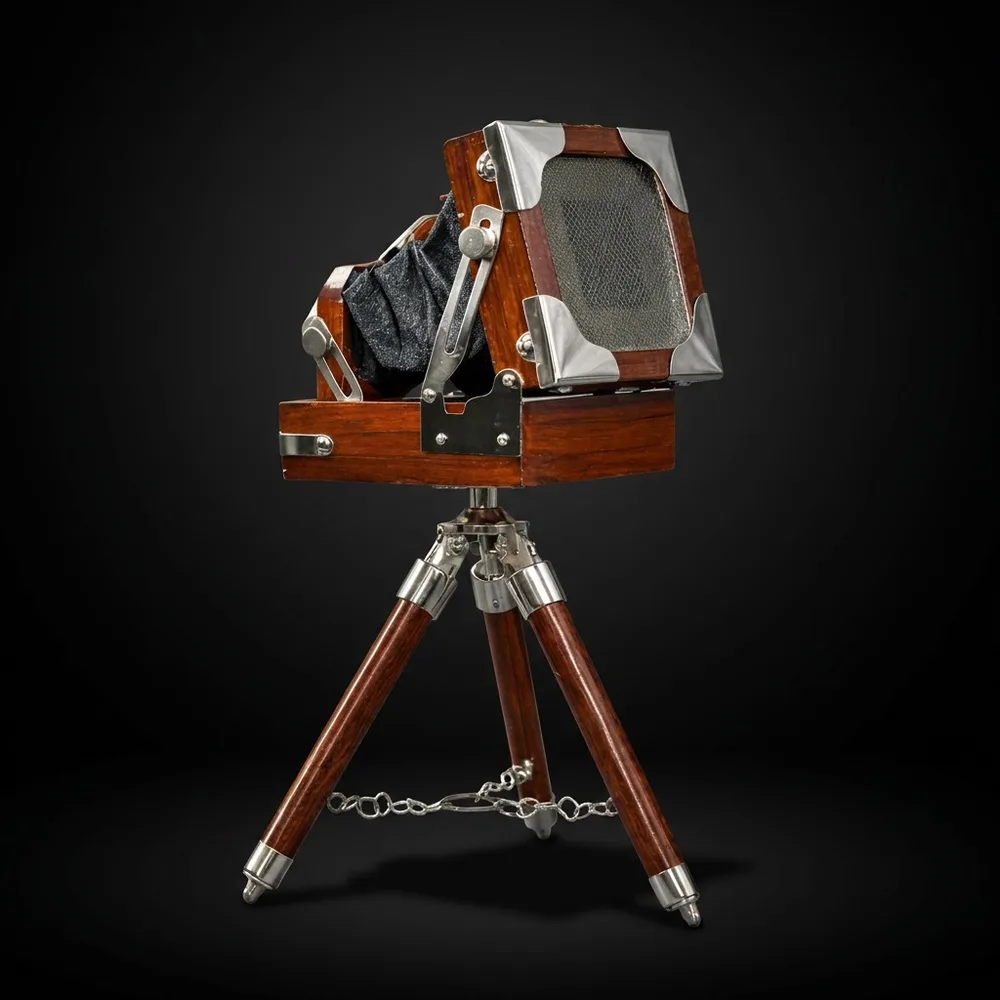
Catalogue reference: ShutterX 13.0. Listed material: Aluminum, Glass, Wood.
Check the current product page and ask for model-specific dimensions, packaging and suitability before ordering.
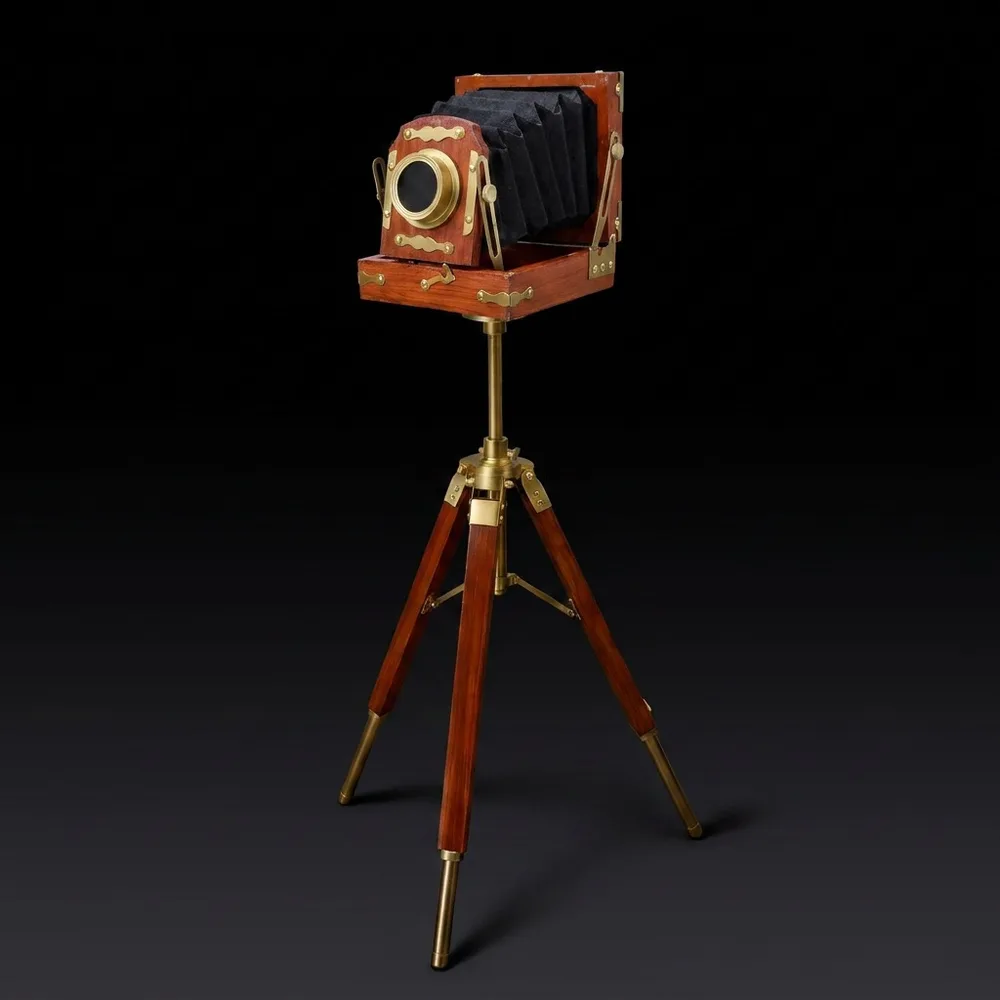
Catalogue reference: ShutterX 21.0. Listed material: Brass, Wood, Aluminum, Glass.
Check the current product page and ask for model-specific dimensions, packaging and suitability before ordering.
Explore Antiqula’s antique cameras catalogue
Catalogue examples were checked against Antiqula’s product records on 2026-10-02. Research sources provide context; they do not certify the performance of individual catalogue products.