Styling a Vintage Camera Replica in a Studio or Study
Place a vintage camera replica with attention to tripod footprint, sightlines, surrounding materials and safe display in a studio or study.
Choose a vintage-style camera replica by silhouette, tripod height, materials and the space available for display.
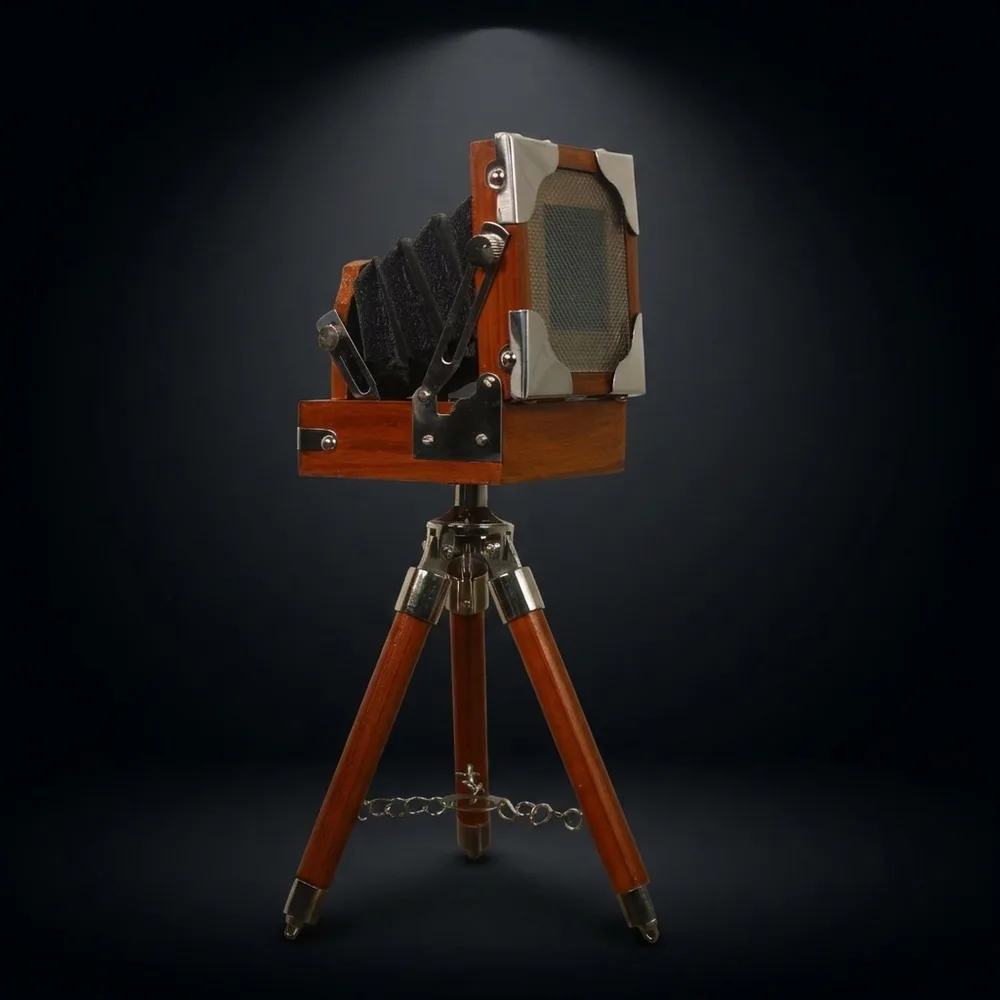
A vintage-style camera replica can bring photographic history into a studio, study, shop window or themed interior. The buying decision is mostly about form and scale: a compact bellows model can sit on a desk, while a floor-standing tripod camera needs clear space and a stable location. Decide first whether the object should be a quiet accent or a room-level focal point, then compare the model’s height, body dimensions and materials.
Antiqula’s catalogue includes a 10-inch wooden bellows camera on an adjustable tripod (shutterx-10-0), a 21-inch brass-and-wood replica on a rustic tripod (shutterx-21-0), and a 45-inch large-format bellows camera on a floor-standing wooden tripod (shutterx-45-0). Their materials and stated heights provide real comparison points. These are decorative replicas; do not infer that their lenses, bellows or controls take photographs or operate as cameras.
Bellows, a lens board and a tripod are visual cues associated with earlier large-format cameras. The Metropolitan Museum of Art’s account of photographer Harry Burton describes a large-format view camera with a bellows between standards, a tripod, a ground-glass plate and a cloth used to view and focus the image. That context helps explain why the silhouette evokes a deliberate, studio-based photographic process. It does not establish that any replica reproduces a working mechanism.
When describing a contemporary decorative piece, call it a replica or vintage-style camera when that matches the listing. Explain which visible elements create its character: folded bellows, a wood body, brass fittings, a glass lens detail or a tripod. Avoid claiming it is an antique, a working camera or historically exact unless evidence for that precise product supports the wording. In a mixed retail range, accurate language matters because a convincing prop can easily be mistaken for functional equipment.
| Format | Catalogue example | Planning point |
|---|---|---|
| Small tabletop | ShutterX 10.0, listed at 10 inches overall | Desk or counter footprint, including tripod legs |
| Medium accent | ShutterX 21.0, listed at 21 inches overall | Shelf depth, body prominence and nearby objects |
| Floor statement | ShutterX 45.0, listed at 45 inches overall | Floor area, clear walking route and tip stability |
Measure the full assembled height and footprint rather than estimating from an image. A tabletop camera can still occupy a surprising amount of desk depth once its tripod legs are open. A floor-standing piece may fit beside a wall but obstruct circulation or a doorway. Consider the view from the entry point and from seated eye level. A camera can look balanced in isolation yet overwhelm a narrow shelf or small reception desk.
Tripod descriptions are important. The 10-inch example lists an adjustable wooden tripod; the 21-inch model names a rustic wooden tripod; the 45-inch option uses a floor-standing wooden tripod. These differences affect presentation and space. Ask how adjustment works and whether a piece is intended to be repositioned. Do not infer that a tripod is load-bearing equipment for an operational camera. For display, check that the legs sit evenly and the replica remains stable on the chosen surface.
Wood gives a warm, furniture-like presence; brass accents can add contrast and catch light. The 10-inch example combines wood, aluminium and glass, while ShutterX 21.0 includes brass, wood, aluminium and glass. The 45-inch camera is listed with aluminium, wood and glass. Read those material descriptions as product-specific facts and ask about any unclear surface treatment. “Glass lens detail” does not mean the lens is optical or usable for photography.
Choose a finish that relates to the setting without trying to match every object exactly. A rustic tripod may suit exposed timber or an industrial interior; a cleaner wood treatment may sit more comfortably in a formal study. Place one camera as the focal object and keep surrounding props simple. Old books, prints or a neutral cloth can establish context, but label any items that are not included with the product. Avoid adding undeclared film, plates or accessories to an online product image in a way that implies functionality.
For tabletop pieces, reserve room to dust around the legs and prevent contact with a monitor, lamp or merchandise. For a tall tripod model, identify a flat surface and check the balance before leaving it unattended in a public area. If visitors may approach, consider a stand, barrier or placement that keeps the tripod from being bumped. Follow supplier instructions for assembly and do not hang extra weight from the replica to make it appear more authentic.
Fragile details deserve attention during receiving and display. Inspect glass elements, bellows folds, joints and tripod connections against the product listing. Ask how the unit is packed and whether the tripod arrives assembled. Record any transit damage before putting the model on the sales floor. For online buyers, include overall height and body dimensions so that the object’s scale is clear without relying on a person or unrelated props in the photo.
Camera replicas can serve photography shops, design retailers, gift stores, hospitality interiors and themed venues, but each buyer has a different space constraint. An assortment might pair one compact piece with one substantial statement item. A retailer with limited shelving may favour the 10-inch model, whereas an interior stylist may be assessing the taller tripod silhouette. These are potential use cases; actual demand should be tested with the retailer’s own audience.
Offer a clear comparison sheet with reference, total height, camera-body size where supplied, materials, tripod type and included packaging. Distinguish confirmed measurements from missing details. Request current order quantities, packing dimensions and delivery terms for the specific references. Do not turn catalogue marketing language into a claim that an item takes pictures, focuses or adjusts optically. A buyer should know exactly whether they are purchasing a display object or photographic equipment.
Dust with a soft cloth and follow model-specific instructions. A replica made from wood, metal and glass combines materials that may need different care. Avoid applying household polish to every surface; an unknown coating or patina can be changed by solvents or abrasives. Keep the piece away from moisture and heat sources, and lift it by stable structural parts rather than by bellows, lens details or a movable control.
Before accepting a sample, inspect the tripod’s joints and contact points, the clarity and security of glass details, the appearance of the bellows and the overall balance. Compare it with the listing, photograph any differences and decide whether they matter for the intended display. Clear measurements and honest replica language help a retailer build atmosphere without suggesting photographic capabilities that have not been verified.
Catalogue reference: ShutterX 10.0. Listed material: Wood, Aluminum, Glass.
Check the current product page and ask for model-specific dimensions, packaging and suitability before ordering.
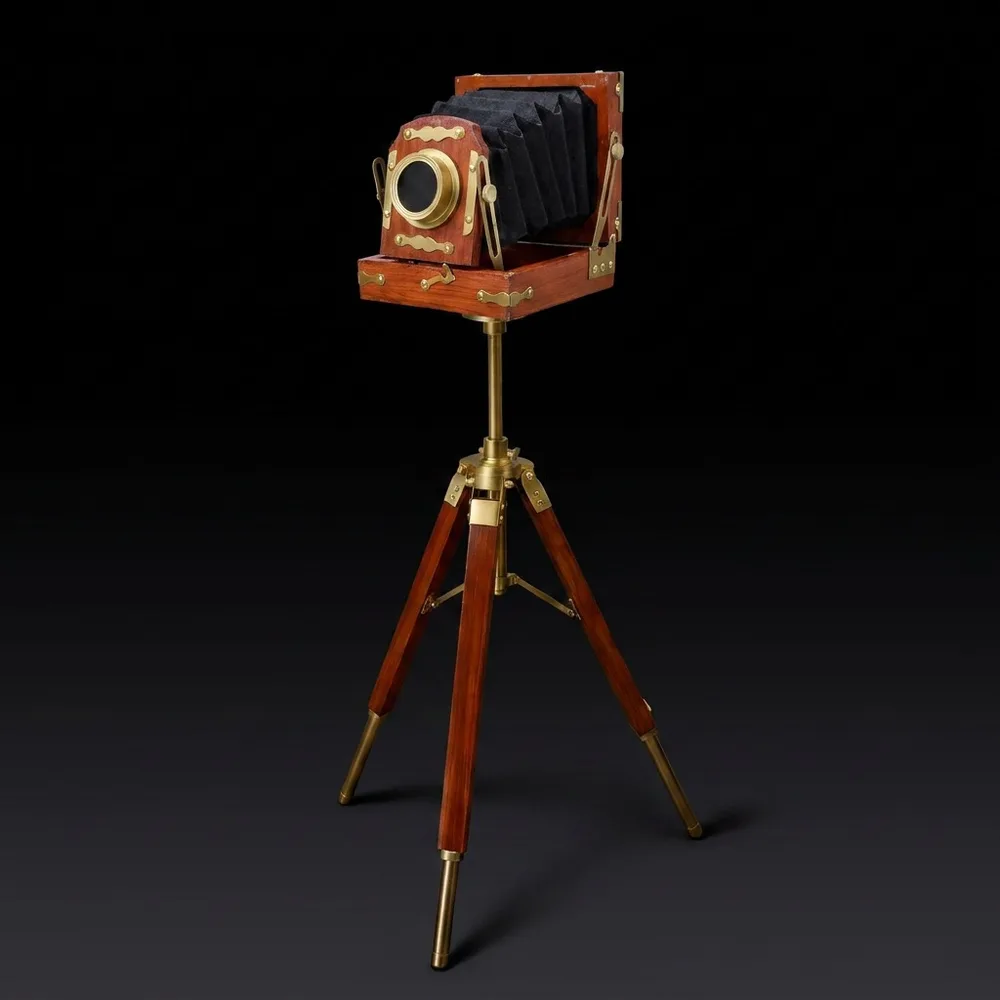
Catalogue reference: ShutterX 21.0. Listed material: Brass, Wood, Aluminum, Glass.
Check the current product page and ask for model-specific dimensions, packaging and suitability before ordering.
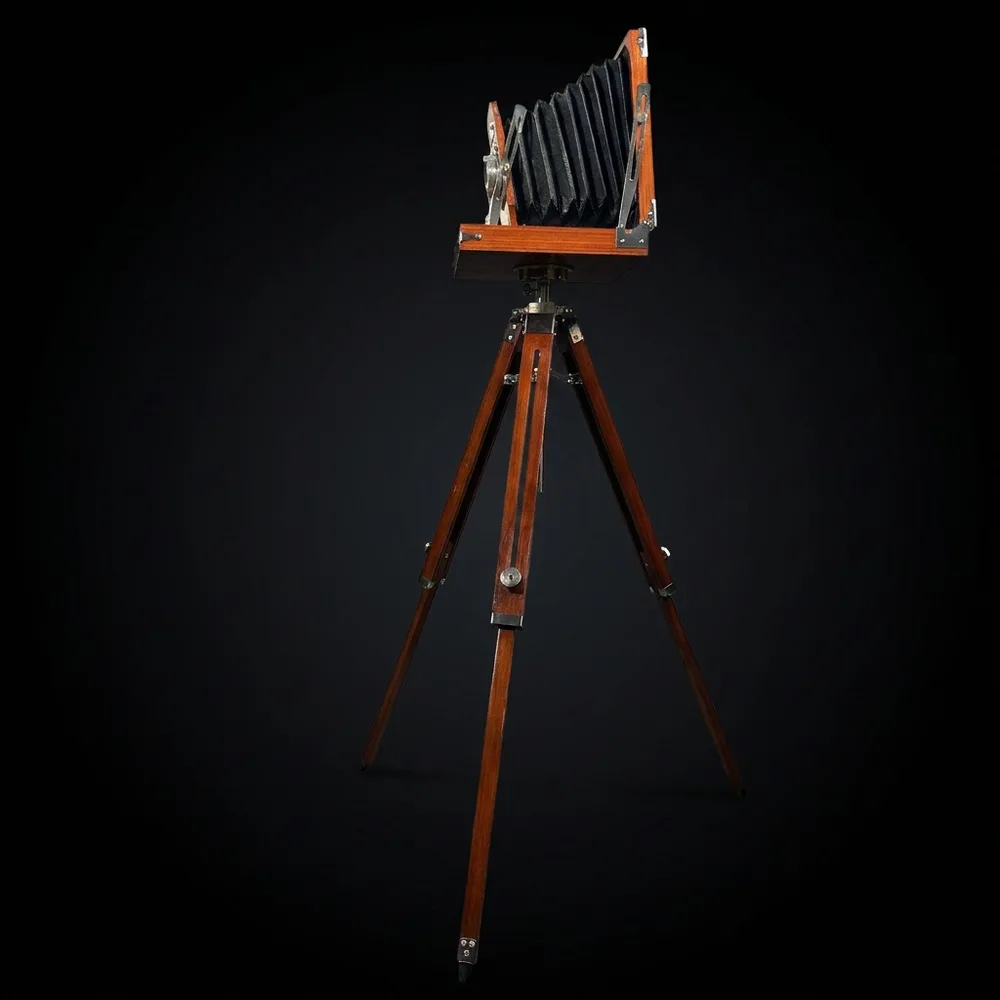
Catalogue reference: ShutterX 45.0. Listed material: Aluminum, Wood, Glass.
Check the current product page and ask for model-specific dimensions, packaging and suitability before ordering.
Explore Antiqula’s antique cameras catalogue
Catalogue examples were checked against Antiqula’s product records on 2026-10-02. Research sources provide context; they do not certify the performance of individual catalogue products.