Liquid vs Non-Liquid Kaleidoscopes: Comparing the Viewing Experience
Compare moving liquid chambers with bead, wheel and other non-liquid kaleidoscope designs by motion, handling and care.
Compare kaleidoscopes by viewing style, chamber, controls, length and presentation for a considered gift or retail assortment.
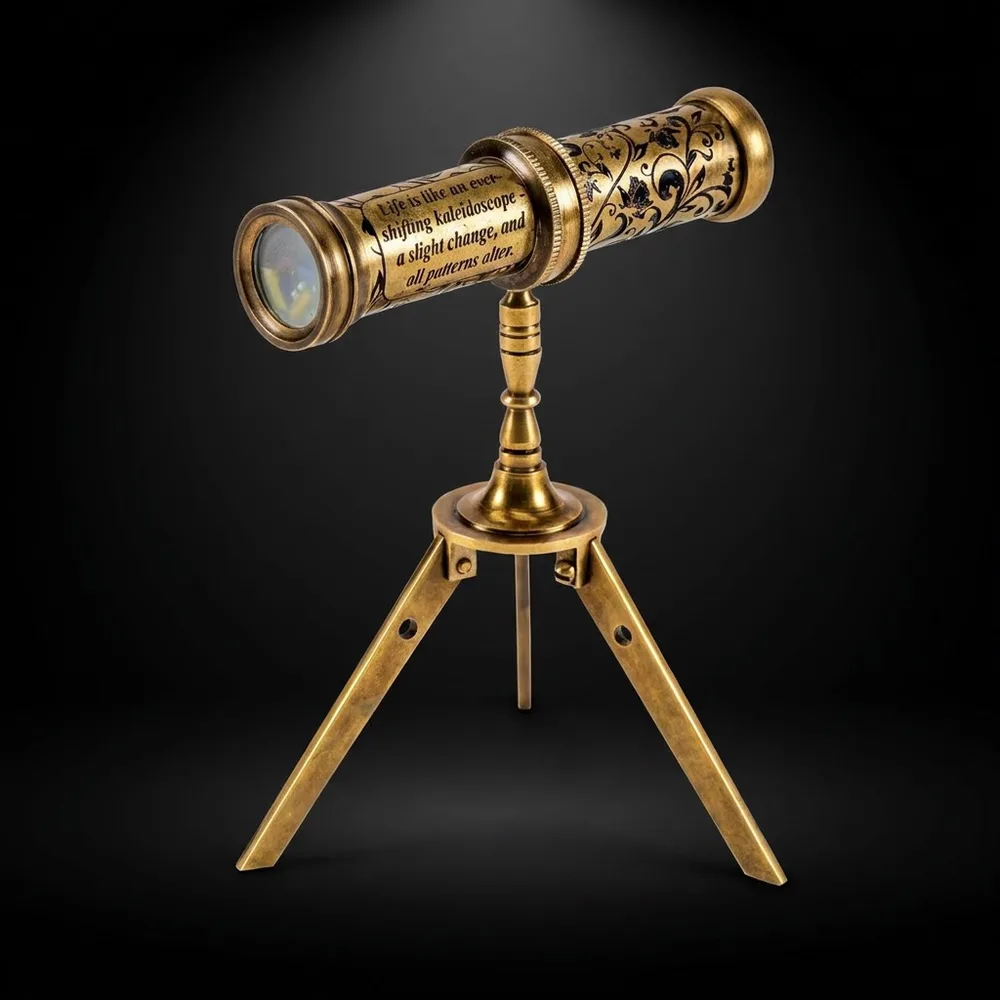
A kaleidoscope is both an optical instrument and an object to handle. The viewing experience comes from looking through an eyepiece while reflected pieces form changing patterns; the barrel, controls and chamber determine how the pattern changes and how the instrument is presented. A buyer choosing one for a gift, classroom, display or shop assortment should compare how it is used as carefully as how it looks on a shelf.
Antiqula’s catalogue includes conventional brass kaleidoscopes, rotating-wheel examples and sealed liquid-chamber models. Three useful references illustrate this variety: an engraved brass scope with detachable tripod stand and fitted wooden box (prismx-6-0-0), an etched brass scope with lampwork glass beads and hardwood stand (prismx-6-0-1), and a 7-inch brass model with sealed oil chamber and hardwood stand (flowx-7-0-0). Each is listed with a three-mirror system. Their controls and presentation differ, so compare a sample rather than relying only on the label.
The classic kaleidoscope uses mirrors and objects to create repeated forms when the instrument is turned. David Brewster’s British patent for an optical instrument called the kaleidoscope dates to 1817; its title describes exhibiting and creating forms and patterns. That history is useful context for a gift or educational display, but it does not tell a buyer how a particular contemporary model behaves.
Some catalogue models use turning wheels or beads; others have a liquid chamber that moves differently when tilted. A teleidoscope is a related form that views reflections of the surroundings rather than relying on a closed object chamber, so it creates a different kind of pattern. Do not use these names interchangeably in product copy. Read the exact listing and observe the sample to describe what the viewer actually sees.
| Design feature | What to observe | Retail question |
|---|---|---|
| Fixed or loose-object chamber | Whether the contents shift when turned | Does the image change at the pace the buyer expects? |
| Rotating wheel or bead elements | How the control turns and what moves | Can a customer operate it without forcing the mechanism? |
| Sealed liquid chamber | How suspended elements drift as the barrel moves | Is the chamber sealed and protected as specified for this model? |
| Open teleidoscope end | How nearby objects enter the pattern | Is there a suitable demonstration area with varied surroundings? |
The two PrismX examples above are listed with a three-mirror arrangement, but their presentations are different: one has a detachable brass tripod and fitted box; the other lists lampwork beads and a hardwood stand. FlowX 7.0.0 adds an oil chamber and hardwood display stand. These listings identify construction details, not a promise that one format is objectively more soothing, educational or durable. Let the intended viewer decide which interaction is engaging.
For a child or classroom, check the maker’s age guidance, small parts, material details and supervision recommendations. Never infer child suitability simply because the object is colourful or described as educational. For adult gifting, consider whether the recipient prefers a compact instrument to hold or a model intended to rest on a stand. For a gallery or hospitality setting, consider whether the viewer can reach it safely and whether handling is permitted.
Length matters because it changes both grip and storage. A 5-inch model may fit a gift box or hand more readily than a longer decorative instrument; a longer scope and stand need a wider shelf and more clearance. Check the full assembled footprint, not only barrel length. When a detachable stand or fitted box appears in the product record, confirm what ships with that reference and whether the assembly is intuitive.
A kaleidoscope is hard to evaluate from a static product photograph. Set a clean sample at a comfortable viewing height, provide enough light to see the pattern and invite a slow turn. Demonstrate the controls gently. If a customer cannot see the image clearly, check eye position, lighting and focus where applicable before concluding that the product is unsuitable. Avoid claiming that every user will see an identical image; contents and movement can make patterns vary.
For online merchandising, explain how the viewer interacts with the instrument: rotate the barrel, turn the wheel, or tilt the chamber, according to that model’s listed design. Use a short video or sequence of genuine product views if available, and distinguish included stands or boxes from styling props. Include a scale reference. Avoid simulated imagery that exaggerates what the scope produces.
Protect the viewing end and any glass elements from impact. Store a scope in its supplied box or case when one is confirmed, and keep it away from grit that could scratch a lens. Do not open a sealed chamber or attempt to refill it. For a liquid model, describe only the maker’s stated chamber type; the listing’s term “oil chamber” does not identify a chemical formula or prove any specific maintenance routine.
Brass barrels may be lacquered, polished or intentionally patinated. The Canadian Conservation Institute explains that polishing can remove surface metal and detail, and that coatings may be important to appearance. Follow the product’s care instructions; dust gently and avoid applying polish or solvents to the mirrors, lens, wood, leather or chamber. If a stand is used for display, position it where the instrument cannot be knocked off a crowded counter.
Retailers can organise a small range around the interaction rather than presenting every brass scope as equivalent. One handled standard model, one moving-object model and one liquid-chamber example demonstrate distinct viewing experiences. Add a compact or presentation-box option only when there is a clear customer use for it. A hands-on sample can support sales, while packaged stock stays clean and complete.
For wholesale planning, compare the specific references, listed inclusions and packed dimensions, then confirm current order and delivery terms with Antiqula. Keep claims limited to observed operation and documented materials. Explain the difference between a pattern created by internal objects and a view that responds to surroundings. This gives buyers a useful basis for selection and gives a retailer a product story that stays close to the actual instrument.
Catalogue reference: PrismX 5.0.3. Listed material: Brass.
Check the current product page and ask for model-specific dimensions, packaging and suitability before ordering.
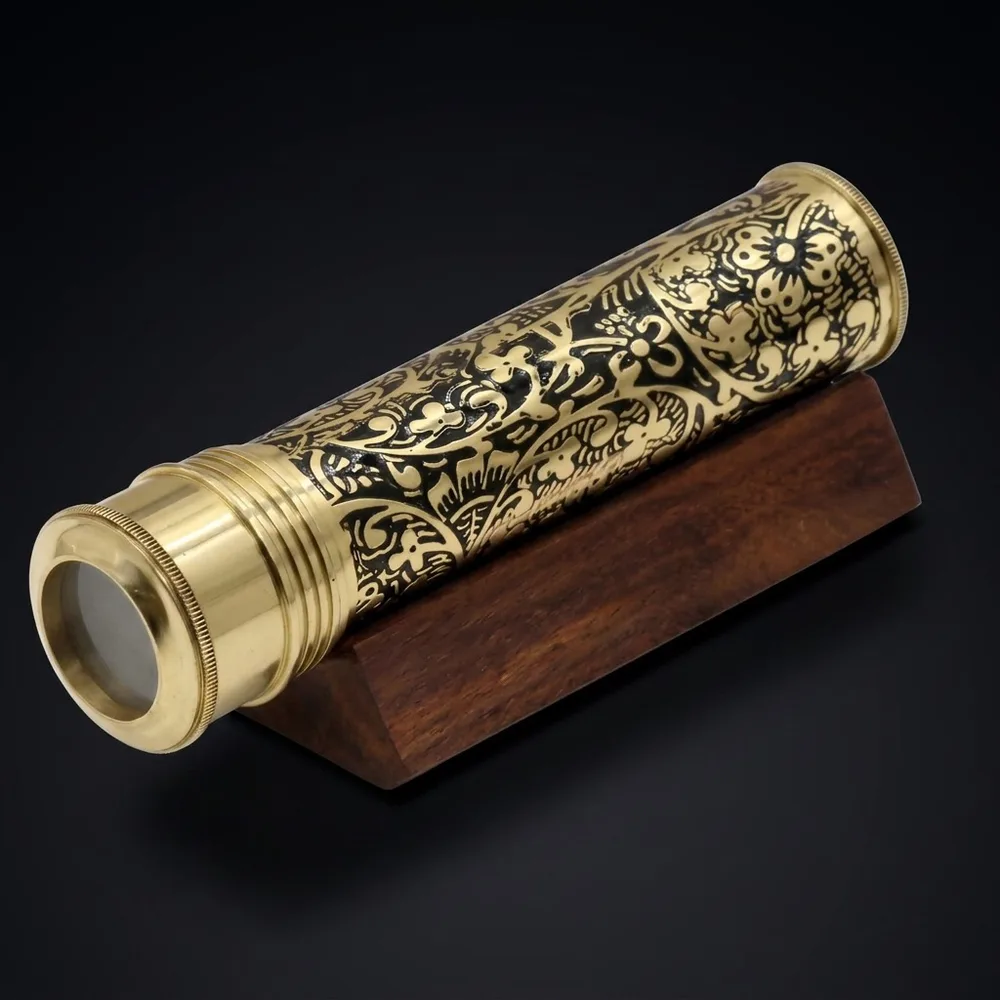
Catalogue reference: PrismX 6.0.0. Listed material: Brass.
Check the current product page and ask for model-specific dimensions, packaging and suitability before ordering.
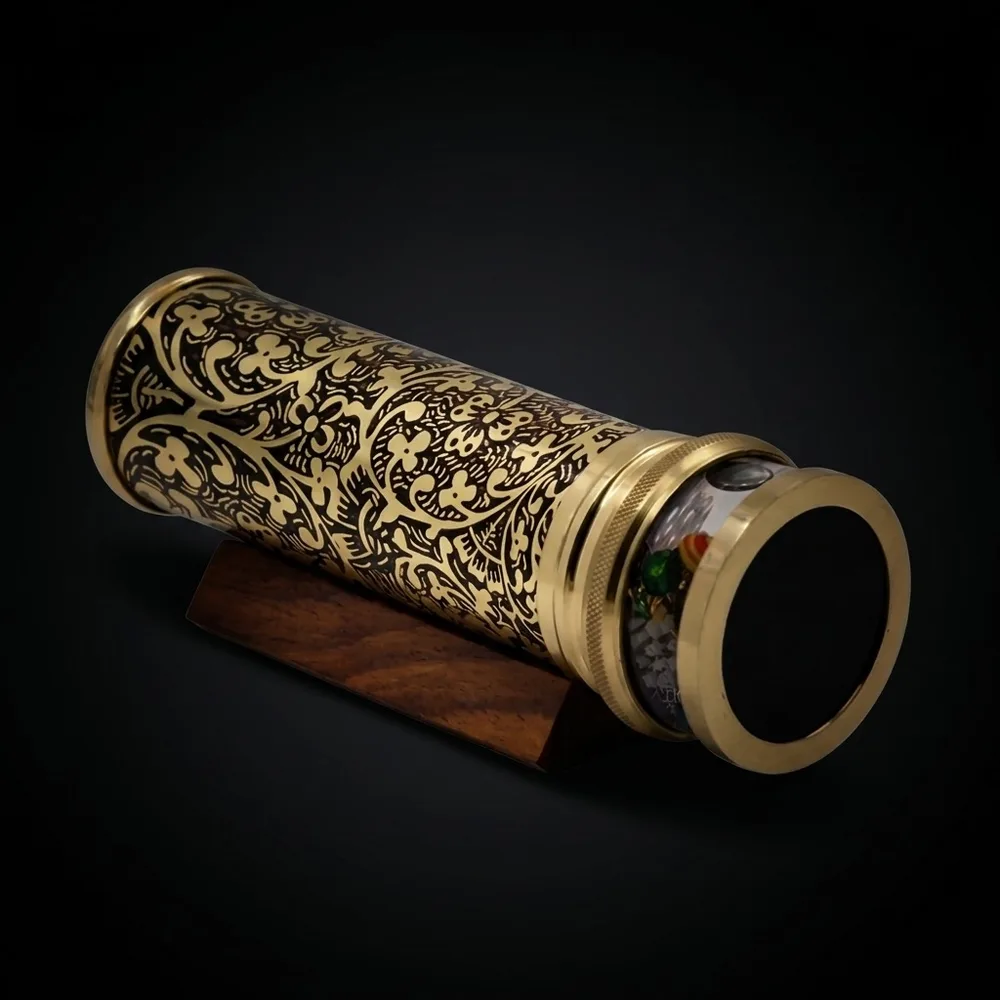
Catalogue reference: FlowX 7.0.0. Listed material: Brass.
Check the current product page and ask for model-specific dimensions, packaging and suitability before ordering.
Explore Antiqula’s kaleidoscopes catalogue
Catalogue examples were checked against Antiqula’s product records on 2026-10-02. Research sources provide context; they do not certify the performance of individual catalogue products.