Choosing a Wood-and-Brass Desk Organiser for Corporate Gifting
Build a practical gifting brief around device fit, logo placement, packaging and the recipient’s workspace.
Consider phone fit, daily desk use and presentation when choosing a wood-and-brass organiser for a study, office or gift assortment.
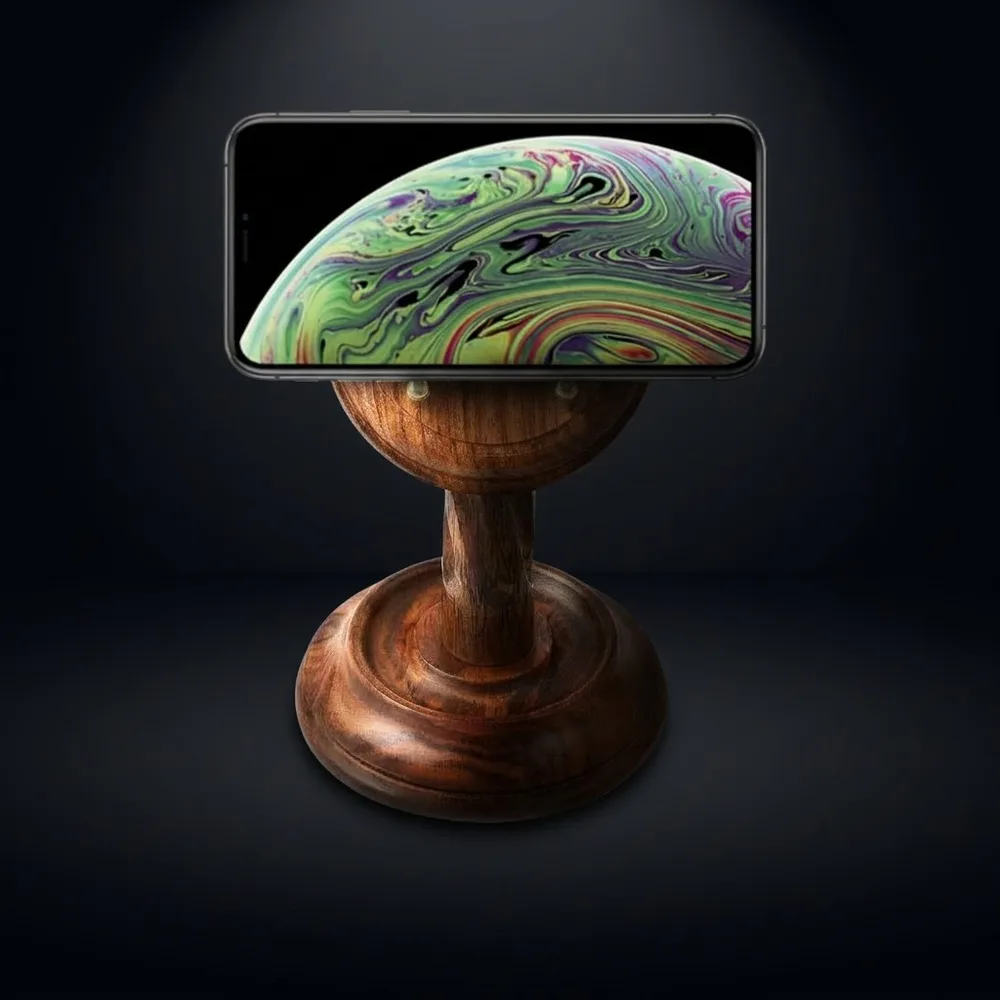
A desk organiser earns its place by making an ordinary action easier. A phone slot can keep a handset visible; pen holders can give frequently used tools a home. The same object may also carry a compass or an ornamental detail. Before choosing it as a gift, decide whether the recipient needs a practical desk accessory, a decorative study object or a combination of both.
Antiqula’s phone-stand category is small: it contains a rosewood phone stand catalogued as a desk organiser and a brass-and-wood stand with a compass. The first product photo shows the rosewood model holding a phone on a raised rest; it does not show separate storage compartments. Compare the actual models rather than assuming the organiser label means additional storage. Start with their shapes and listed materials, then confirm the dimensions that determine everyday fit. A photograph cannot establish compatibility with every phone or protective case.
Think about when the phone will sit in the organiser. A person who uses it as a second screen may want to see it while seated. Someone who mainly parks it between calls may prefer a quieter storage position. If the handset is frequently picked up, there needs to be room to grasp it without disturbing pens or other objects.
Write down the orientation you expect: portrait, landscape or both. Then ask whether the selected slot supports that orientation with the phone’s case attached. Do not presume a stand can accommodate a large handset because a smaller phone appears in a promotional image. Slot width, depth and surrounding clearances deserve direct measurement.
Charging is another separate question. A slot may hold a phone well while offering no route for a cable. Decide whether charging in place is essential, and check the connector position and cable bend before making that claim to a recipient. A neat photograph without wires is not evidence of a charging feature.
| Selection question | Rosewood phone stand | Brass-and-wood compass stand |
|---|---|---|
| Visual emphasis | Wood surface and compact study character | Mixed materials and an instrument detail |
| Daily-use question | How the phone sits on the raised rest | Phone access alongside the listed pen holders |
| Gift message | A considered desk accessory | A desk object with navigation imagery |
| Verification priority | Slot dimensions and device fit | Slot dimensions, compass placement and desk clearance |
The catalogue names and listed materials help define a shortlist. They do not establish the wood’s surface treatment, scratch resistance or universal device compatibility. Ask for those details only where they matter to the intended use. Keeping the brief focused makes the response easier to evaluate.
A desk organiser should not crowd the working edge of a keyboard, notebook or mouse area. Set aside its full footprint and consider the height of a phone placed in it. An accessory that fits on an empty desk may block a monitor or compete with a lamp once the workspace is in use.
For a shared office, consider whether the organiser will be moved regularly for cleaning or hot-desking. Ask about the underside, contact points and suitable surface protection. Do not assume a wooden base includes felt, rubber or another protective treatment unless that is confirmed for the exact model.
A decorative compass adds a point of interest, but metal desk frames, speakers and other nearby objects may affect a magnetic compass reading. Treat its presence as a design feature unless reliable performance in the intended setting has been demonstrated. It is not a substitute for a navigation instrument.
Wood and brass can sit comfortably alongside books, paper and leather accessories. The aim is a coherent desk, not a collection in which every finish must match precisely. Let the organiser occupy one clear role. If it is the decorative focal point, keep neighbouring objects relatively quiet so its form remains visible.
For a retailer, show how the organiser relates to ordinary stationery rather than filling every opening with unrelated props. A small demonstration phone or a clearly labelled sample can help customers understand scale. Avoid props that imply included accessories. Pens, watches and phones should be identified as styling items unless the product listing explicitly includes them.
The recipient’s working environment should shape the brief before branding does. Include the likely phone-size range, desk conditions, quantities, delivery destination and preferred presentation. If an inscription or logo is desired, ask where it can be placed without obstructing the slot or covering an important decorative feature.
Do not promise engraving, a particular minimum quantity or a lead time from a general website statement. Request confirmation for the selected reference. Artwork requirements, proof approval, position and finish should be part of the response. A proof ought to show the actual usable area rather than a logo floating over a product photograph.
Place the sample on a working desk. Fit a representative phone with its case, pick it up several times and check whether the organiser shifts. Insert the ordinary pens the recipient is likely to use. Inspect exposed edges and the base where it meets the desk. These checks reveal practical issues that can be missed during a purely visual review.
Then examine the packaging. Does it protect corners, brass details and the compass where present? Are any loose components separately secured? Request model-specific care guidance. For finished wood, avoid improvising with metal polish or a cleaner intended for another surface. For brass, distinguish gentle cleaning from polishing that can change a finish.
A useful product explanation says what the organiser holds, which materials are listed and which fit conditions have been checked. It should not suggest that the object will transform productivity or suit every device. For a gift assortment, two clearly differentiated options can be more useful than a long set of vague lifestyle claims.
Choose the model that fits the intended desk routine and presentation. Confirm the dimensions, included items and order terms before placing a wholesale order. A small accessory becomes a thoughtful gift when those everyday details have been considered carefully.
Catalogue reference: MobiX 5.0. Listed material: Indian Rosewood.
Check the current product page and ask for model-specific dimensions, packaging and suitability before ordering.
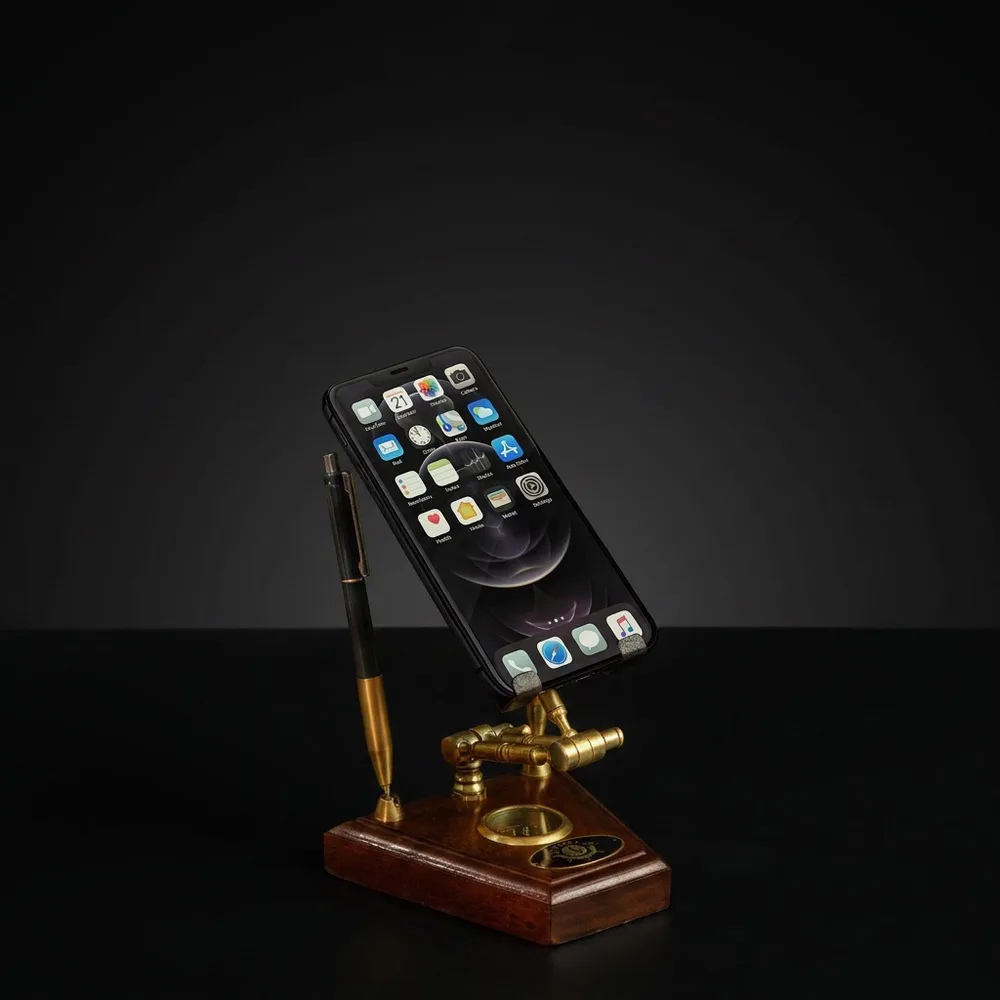
Catalogue reference: MobiX 6.0. Listed material: Solid Brass, Wood.
Check the current product page and ask for model-specific dimensions, packaging and suitability before ordering.
Explore Antiqula’s phone stands catalogue
Catalogue examples were checked against Antiqula’s product records on 2026-10-02. Research sources provide context; they do not certify the performance of individual catalogue products.