Embossed Brass Goblets for Themed Displays: Shape, Pattern and Finish
Compare embossed brass goblets by silhouette, relief, finish and display scale for retail, costume or themed interiors.
Choose a brass chalice or goblet by silhouette, relief, finish, scale and presentation for display, gifting or themed settings.
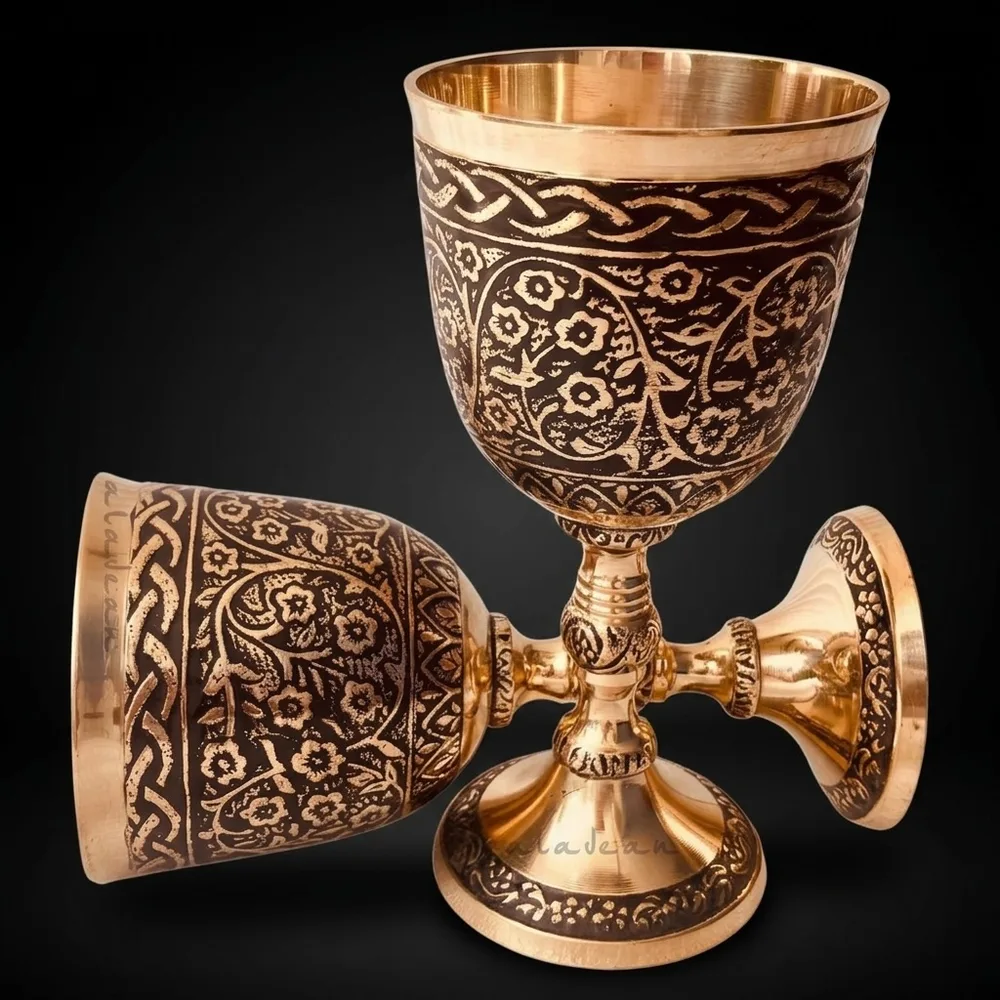
“Chalice” can describe a ceremonial cup, while “goblet” often describes a stemmed drinking vessel. In decorative retail, listings may use both words for brass objects whose strongest role is display or themed presentation. Start by deciding what the object is expected to do: anchor a shelf, complete a costume or set, serve as a gift, or hold a beverage. A catalogue description and an attractive finish do not by themselves establish that a vessel is suitable for food contact.
Antiqula’s range gives buyers several ways to compare form and decoration. The Nordic Czar embossed goblet (grailx-6-0) is listed as a 6-inch brass item with an antique-gold finish and 7-ounce capacity. The 5-inch Gothic Renaissance wine glass (grailx-6-9) has an unplated antique-brass finish and a listed 5-ounce capacity. A taller gold-plated example with blue stone accents (grailx-7-5-0) is listed at 7.5 inches. These are specific catalogue records; capacity or appearance does not verify safe beverage use.
For a shelf or display cabinet, assess silhouette, pattern and visibility from normal viewing distance. A heavily embossed surface can catch light and show texture; a smooth surface may read more quietly. For a costume, prop or themed event, think about handling, weight, stability and how the cup fits the overall scene. For a gift, presentation and the recipient’s interest may matter more than capacity.
If a buyer intends to serve a drink, pause before making that promise. Ask Antiqula for written, model-specific confirmation that the interior, alloy, finish and construction are suitable for the exact beverage and cleaning method. Until that evidence is available, describe the object as decorative or for display and avoid directing customers to consume from it. A capacity field in a catalogue is a volume measurement, not food-contact certification.
The bowl, stem and base work together to create a goblet’s profile. A taller, narrow form can look more formal; a low, broad bowl can feel more substantial on a small plinth. Relief also changes the viewing experience. Raised designs are legible at a distance when their highlights catch light, while fine engraving invites closer inspection. The catalogue’s Nordic Czar pattern offers an embossed example; the Gothic Renaissance item is a smaller glass form; the blue-stone, gold-plated version provides a taller accent.
| Selection point | What to compare | What to verify on a sample |
|---|---|---|
| Silhouette | Bowl width, stem length and base proportion | Overall height and whether it stands level |
| Decoration | Embossed, engraved, smooth or stone-accented surface | Pattern clarity, finish consistency and securely set details |
| Finish | Antique gold, unplated brass or plated appearance | Exact material and care guidance for the model |
| Scale | Individual piece, matching pair or set | Dimensions, unit count and packaging |
Catalogue names such as “solid brass,” “gold plated” and “antique brass” are not interchangeable. Use the exact material and finish text for the selected reference. Do not infer that a gold-coloured surface is solid gold or that every brass goblet has the same underlying construction. If a detail affects the buyer’s decision, request a current specification and compare it with the physical sample.
Choose the display location before choosing the size. Measure shelf height and depth, leaving room to lift the cup without catching the rim or nearby objects. A wide base may need more depth than the product photo suggests. The first photo for grailx-6-0 stages more than one goblet, while its catalogue record lists a unit count of one; make that single-piece quantity explicit wherever the image is used. If several pieces are displayed together, arrange them so the silhouette of each remains visible. An embossed design loses its effect if tightly packed among other objects.
Light can clarify or overpower a metallic finish. Try the piece under the actual shop or room lighting. A spot lamp may create a bright reflection that obscures relief; softer side lighting can show contours. For a themed display, pair the goblet with a restrained set of related objects rather than a crowded collection of unrelated props. Clearly label accessories that are not included.
Inspect the base for level contact and check the bowl and stem for loose or sharp details before placing a piece where customers can handle it. For events or theatrical use, make sure the object can be set down safely and does not obstruct movement. Keep heavier or taller models away from unstable edges. Where an object is intended only for display, a discreet note can help prevent a customer from mistaking visual realism for confirmed drinking suitability.
A useful selection can offer a few visibly different choices: a classic embossed brass goblet, a smaller Gothic form and a taller accent model. This gives a store options for medieval, theatrical, heritage or fantasy-themed displays without implying that every item belongs to the same historical period. Treat these as design categories, not historical authentication. Use “medieval-inspired” or “Gothic-style” when the listing supports a decorative interpretation, and avoid describing reproductions as genuine antiques.
For hospitality, event or gift-shop buyers, request the exact item references, unit count, dimensions, packaging and current order terms. If a matched set is required, confirm that pieces share the same finish and proportions and whether the listing is for a set or an individual unit. Product photography can help compare motifs but is not a substitute for checking colour and relief on a sample. Keep a record of which sample and listing version informed the purchase.
Retail descriptions should separate ornament from function. “A 6-inch brass goblet with Nordic Czar embossed relief” communicates shape, material and pattern. Add a display suggestion only when it is plainly a suggestion. Avoid “food-safe,” “drink from it,” “ceremonial vessel” or religious-use claims unless model-specific evidence and the context support them. This is especially important when selling across markets where intended use and buyer expectations may differ.
Dust the object gently and follow the supplier’s instructions for its exact finish. The Canadian Conservation Institute notes that polishing brass is abrasive and repeated polishing can remove metal and surface detail; coatings or patinas may be part of the intended appearance. That guidance makes aggressive polishing a poor default for an embossed decorative piece. Avoid household chemicals or immersion unless the manufacturer confirms they are appropriate, particularly for plated surfaces or stone accents.
For display, keep the goblet dry and away from corrosive residues, and use a stable, clean surface. Store pieces so rims and bases do not rub against one another. If an item arrives with a finish variation or a loose decorative element, document it before deciding whether it is acceptable for the intended assortment. The best chalice selection is one whose scale, motif and presentation fit its setting, with its functional limits described honestly.
Catalogue reference: GrailX 6.0. Listed material: Brass.
Check the current product page and ask for model-specific dimensions, packaging and suitability before ordering.
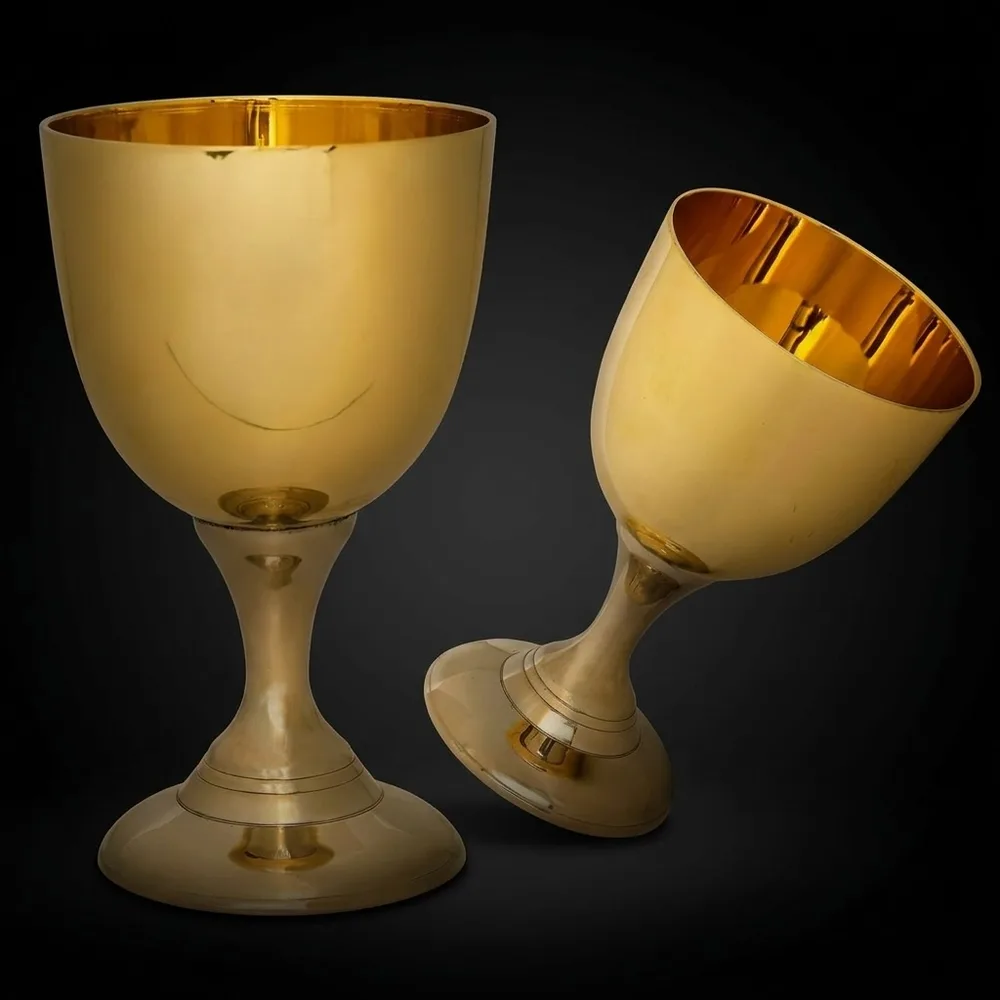
Catalogue reference: GrailX 5.0. Listed material: Brass.
Check the current product page and ask for model-specific dimensions, packaging and suitability before ordering.
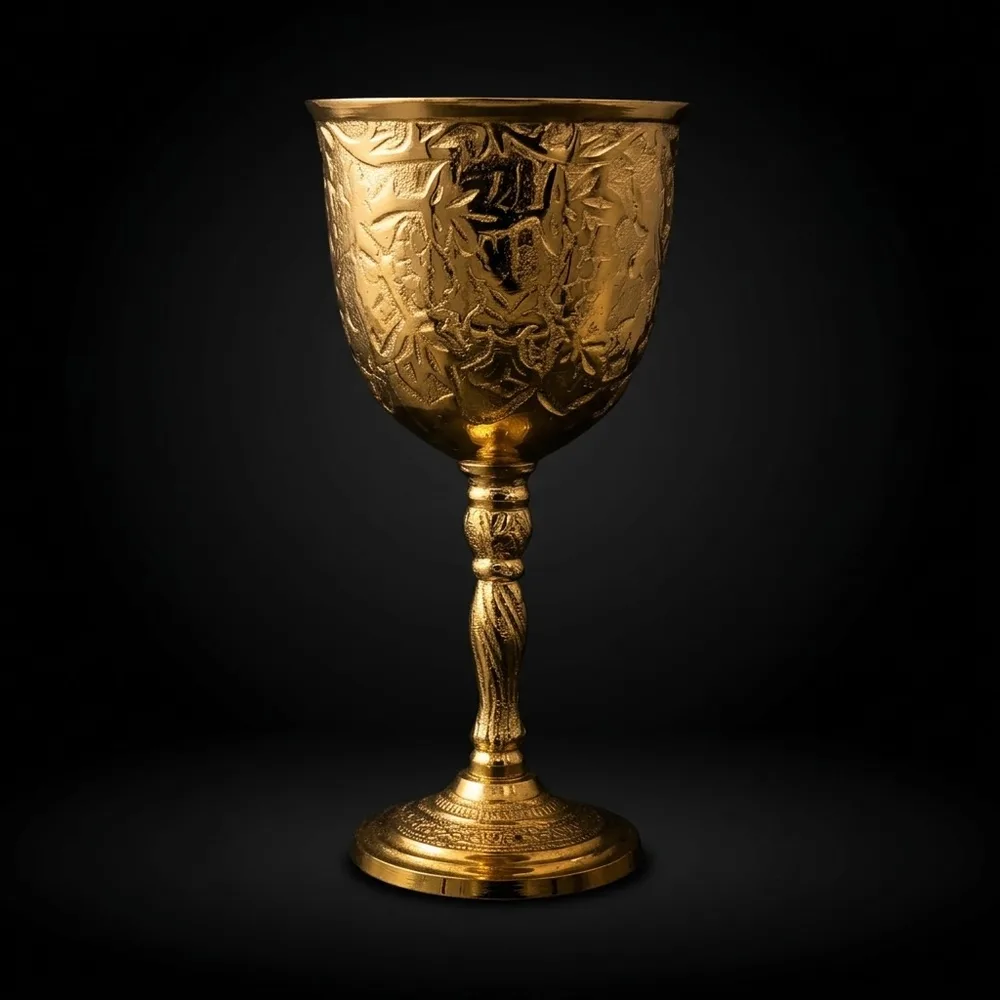
Catalogue reference: GrailX 7.5.0. Listed material: Brass.
Check the current product page and ask for model-specific dimensions, packaging and suitability before ordering.
Explore Antiqula’s chalice catalogue
Catalogue examples were checked against Antiqula’s product records on 2026-10-02. Research sources provide context; they do not certify the performance of individual catalogue products.